


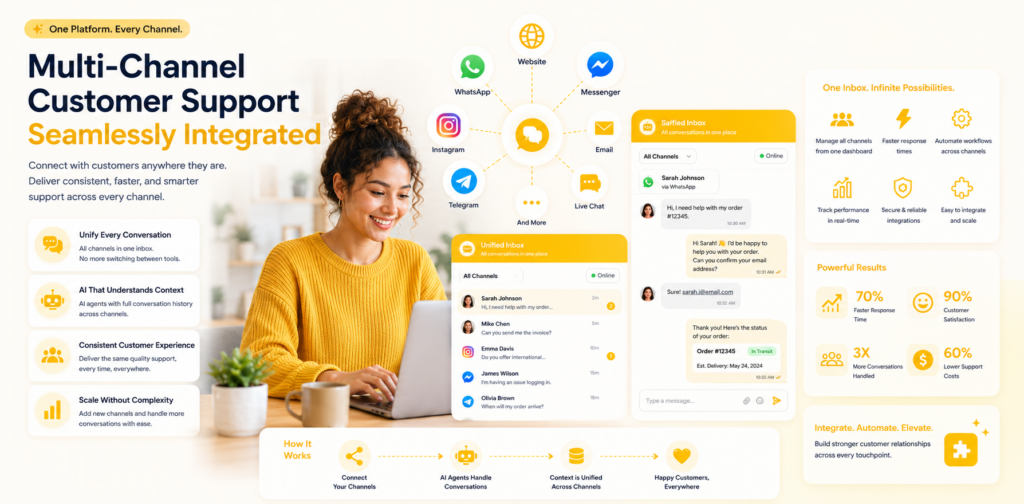
Today's customers expect support on their preferred channel—whether that's WhatsApp, email, chat, or SMS. A multi-channel customer support strategy using a unified platform is no longer optional; it's essential for competitive success.
What You'll Learn
- Why multi-channel support matters
- Channels to prioritize
- Unified inbox strategy
- Integration best practices
- Customer routing automation
- Performance metrics
Why Multi-Channel Support Matters
Customer Expectations
Modern customers have clear preferences:
- 80% prefer companies to communicate on their channel of choice
- 65% switch brands due to poor support experience
- 72% expect personalized service across channels
- 59% want consistent information across channels
Business Benefits
Increased Customer Satisfaction
- Support customers where they already are
- Faster response times
- Reduced friction
- Better customer lifetime value
Operational Efficiency
- Centralized agent dashboard
- Shared knowledge base
- Reduced context switching
- Better resource allocation
Competitive Advantage
- Stand out from competitors
- Build customer loyalty
- Increase retention rates
- Generate positive word-of-mouth
The Top Support Channels
1. WhatsApp (Most Important)
Why it matters:
- 1.5 billion monthly active users
- 80% of customers prefer messaging over calls
- Quick, informal communication
- Rich media support
Best for:
- Casual inquiries
- Order updates
- Quick support questions
- Proactive outreach
- Customer retention
Statistics:
- Average response time: 2 minutes
- First response expectations: 5 minutes
- Customer satisfaction: 4.6/5 average
- ROI: 300-400% typical
2. Email
Why it matters:
- Formal, documented communication
- Best for complex issues
- Attachment support
- Professional tone
Best for:
- Detailed inquiries
- Technical issues
- Policy questions
- Account requests
- Legal/compliance matters
Statistics:
- Average response time: 24 hours
- Resolution time: 48-72 hours
- Still preferred by 35% of business customers
- ROI: Steady, predictable
3. Live Chat
Why it matters:
- Real-time interaction
- Immediate issue resolution
- Convenient for web visitors
- Engagement opportunity
Best for:
- Pre-purchase questions
- Technical troubleshooting
- Real-time assistance
- Reducing support tickets
- Sales support
Statistics:
- Average response time: 1 minute
- Conversion impact: +20% with chat
- CSAT: 4.3/5 average
- ROI: High for e-commerce
4. SMS/Text
Why it matters:
- 99% open rate
- Immediate delivery
- Simple format
- Mobile-first
Best for:
- Urgent alerts
- Appointment reminders
- Two-factor authentication
- Order confirmations
- Time-sensitive updates
Statistics:
- Average response rate: 45% (higher than email)
- Open rate: 99%
- Customer preference: Growing
- ROI: Moderate, dependent on use case
5. Social Media
Why it matters:
- Where customers already spend time
- Public communication
- Brand reputation impact
- Community building
Best for:
- Public inquiries
- Brand reputation management
- Community engagement
- Viral issue detection
- Customer feedback
Statistics:
- Response time expectations: <2 hours
- Unresponded messages: -90% CSAT
- Positive mentions: Brand advocacy
- ROI: Depends on industry
Building a Unified Multi-Channel Platform
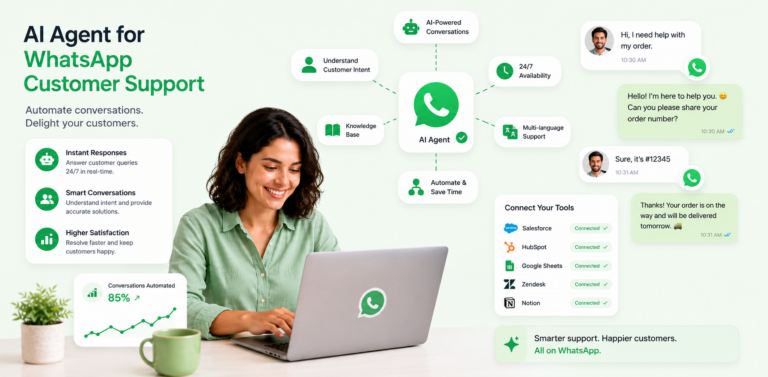
Bringing every channel into one system is the foundation of a true omnichannel AI support strategy — one platform, every channel, with shared context behind it.
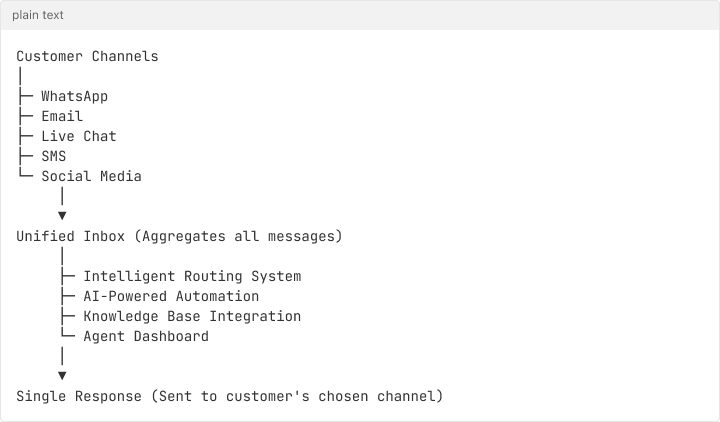
Architecture Overview
Key Components
1. Message Aggregation
- Centralized inbox collecting all messages
- Unified thread view
- Customer history visible
- No message siloing
2. Intelligent Routing
- Automated rule-based routing
- Skill-based assignment
- Load balancing
- Escalation workflows
3. AI Automation Layer
- Chatbot for simple queries
- Smart categorization
- Priority flagging
- Sentiment detection
4. Knowledge Base Integration
- Unified resources
- AI-powered suggestions
- Multi-language support
- Continuous learning
5. Analytics & Reporting
- Cross-channel metrics
- Agent performance
- Channel effectiveness
- Customer satisfaction
Implementation Strategy
Phase 1: Assessment (Week 1)
Analyze current state:
- Which channels are you currently using?
- What volume on each channel?
- Where are gaps?
- Customer preferences survey
Define goals:
- Which channels to prioritize?
- What's your target response time?
- What's the success metric?
- Budget allocation
Phase 2: Channel Selection (Week 2-3)
Start with 2-3 channels:
Option A: Customer-Centric (Recommended for most)
- WhatsApp (primary growth channel)
- Email (formal inquiries)
- Live Chat (web engagement)
Option B: Enterprise
- Email (primary)
- Live Chat (pre-sales)
- Phone/Ticketing (complex)
Option C: E-Commerce
- WhatsApp (conversions)
- Live Chat (pre-sales)
- SMS (updates)
Phase 3: Platform Selection (Week 3-4)
Evaluate options:
- Chatloop, Tidio, Zendesk, Intercom, etc.
- API availability
- Integration ecosystem
- Cost structure
- Scalability
Critical requirements:
- ✅ Unified inbox across channels
- ✅ AI/chatbot capabilities
- ✅ Robust API
- ✅ Knowledge base integration
- ✅ Analytics dashboard
- ✅ Mobile agent app
Phase 4: Integration Setup (Week 4-6)
Connect your channels:
- WhatsApp Business API setup
- Email integration
- Chat widget deployment
- SMS provider integration
- CRM/ticketing connection
Configure automations:
- Auto-responders
- Routing rules
- AI responses
- Escalation workflows
Phase 5: Team Training (Week 5-6)
Train support team:
- Platform navigation
- Channel-specific etiquette
- Escalation procedures
- Knowledge base usage
- Measurement dashboards
Phase 6: Launch (Week 7)
Go live:
- Enable channels gradually
- Monitor response quality
- Gather team feedback
- Make adjustments
- Scale up
Phase 7: Optimization (Week 8+)
Continuous improvement:
- Monitor metrics
- Update knowledge base
- Train AI on edge cases
- Refine routing rules
- Expand to more channels
Best Practices for Multi-Channel Success
Best Practice #1: Maintain Consistent Brand Voice
Why: Customers expect the same experience across channels
How to implement:
- Create channel-specific tone guidelines
- Use response templates
- Brand consistency guidelines
- Regular quality reviews
Best Practice #2: Provide Seamless Context
Why: Customers shouldn't have to repeat information
How to implement:
- Integrate with CRM
- Maintain unified customer profile
- Enable channel switching without context loss
- Use conversation history
Best Practice #3: Meet Channel Expectations
Why: Response time varies by channel
Response time targets:
- WhatsApp: 2-5 minutes
- Live Chat: 1-2 minutes
- Email: 24 hours
- SMS: 15 minutes
- Social Media: 2 hours
Best Practice #4: Use AI to Prioritize
Why: Not all messages require human attention
AI routing:
- Immediate AI response for simple queries
- Automatic categorization
- Priority flags for urgent issues
- Intelligent queuing
Best Practice #5: Monitor Cross-Channel Metrics
Why: Some issues only visible across all channels
Metrics to track:
- Overall satisfaction (across channels)
- Response time by channel
- Resolution rate by channel
- Customer effort score
- Channel usage trends
Technology Stack Example
| Layer | Component | Example Tools |
|---|---|---|
| Channels | Communication APIs | WhatsApp, Twilio, Mailgun |
| Aggregation | Unified Inbox | Chatloop, Intercom, Zendesk |
| AI/Automation | Chatbot Platform | Chatloop, OpenAI, specialized |
| Knowledge | Knowledge Base | Notion, Slite, dedicated KBs |
| CRM/History | Customer Data | Salesforce, HubSpot, custom |
| Analytics | Dashboards & Reports | Looker, Tableau, built-in |
Real-World Implementation Example
Company: Mid-Market SaaS
Before:
- Email-only support
- 2-day average response time
- 400 tickets/month
- 3.5/5 CSAT
After Multi-Channel:
- WhatsApp, Email, Live Chat
- <1 hour average response
- 400 tickets/month (same volume)
- 4.3/5 CSAT (+22%)
Results:
- 30% improvement in customer satisfaction
- 40% reduction in support load through AI
- $50K/year savings
- Improved retention: +15%
Channel Comparison Matrix
| Factor | Chat | SMS | ||
|---|---|---|---|---|
| Speed | Fastest | Slow | Fast | Very Fast |
| Formality | Casual | Formal | Casual | Brief |
| Rich Media | Yes | Limited | Limited | No |
| Scalability | High | High | Medium | High |
| Cost | Low | Low | Medium | Medium |
| Customer Preference | Growing | Declining | Stable | Growing |
| Implementation | Medium | Easy | Medium | Easy |
FAQ & Troubleshooting
Q: Do I need to support all channels immediately?
A: No. Start with 1-2 channels where your customers are. WhatsApp is recommended as primary. Expand gradually.
Q: How does AI routing work across channels?
A: AI analyzes message content to categorize and prioritize. Simple FAQs get automatic responses. Complex issues route to humans.
Q: Can one agent handle multiple channels?
A: Yes. A unified inbox makes it natural. Many agents handle 2-3 channels simultaneously.
Q: What about channel notification fatigue?
A: Use smart batching, priority levels, and quiet hours settings to prevent alert overload.
Q: How to manage handoffs between channels?
A: Use context sharing. If a customer starts on WhatsApp, they can seamlessly continue on email with full history.
Implementation Checklist
- Analyze current customer support channels
- Survey customers about preferences
- Define response time SLAs per channel
- Select 2-3 priority channels
- Evaluate unified platform options
- Map integration requirements
- Plan knowledge base migration
- Set up channel APIs and integrations
- Configure routing rules
- Set up AI automation workflows
- Create response templates
- Train support team
- Do pilot launch
- Monitor metrics daily
- Optimize based on data
- Expand to additional channels
Conclusion
A unified multi-channel customer support approach is essential in 2026. By meeting customers on their preferred channels while maintaining operational efficiency through a centralized platform, you can dramatically improve satisfaction, reduce costs, and build lasting customer relationships.


Comments are closed.